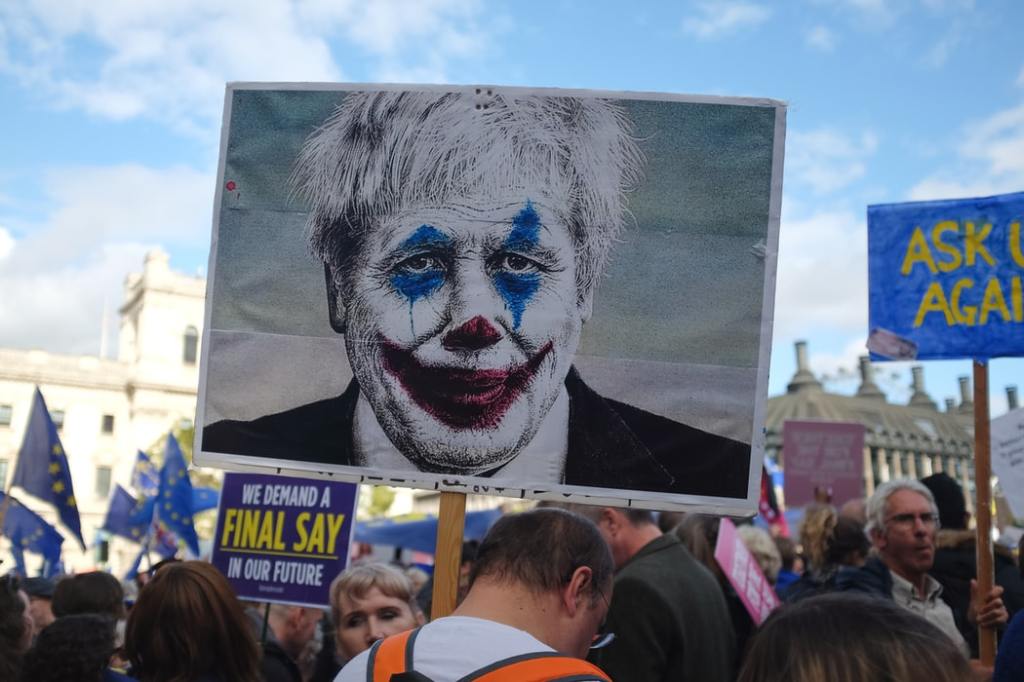
Families invariably fall out, but when politics is the cause of that rift, things go up a notch. To disagree with your loved ones on how the world should be ordered conjures up all sorts of emotions, as many have discovered since lockdown.
As a family, we epitomised the UK’s political landscape. Mum and dad wanted out, son and daughter wanted in. The stats back it up: 71 per cent of 18 to 24-year-olds voted to remain while 60 per cent of 50 to 64-year-olds voted to leave.
During the turmoil of Brexit, I considered hoaxing my parents into believing we had already left the EU. I would paint their passports blue, binge-watch Dad’s Army and stock up on custard creams. They might say, “Oh, haven’t things been better since Brexit, son, all that fuss over nothing.”
I am grateful for the leg-ups my parents have given me in life, and I still consult them often. I used to play dress-up with dad: he would be Batman, I would be his sidekick Robin. When I learned that dad voted for Brexit, it was as if Batman had turned to Robin and KAPOWED him square in the face.
Over four years later, Britain has now exited the EU. On the surface, my mum, dad, sister and I are as close as can be, but Brexit still divides us. I had never fundamentally disagreed with my parents’ beliefs before the referendum, but Brexit was different. Just 26 per cent of Britons had a row with someone about the 2019 General Election, but twice as many (48 per cent) had argued with someone about Brexit.
Brexit on the family WhatsApp
Our family WhatsApp group is still packed with Brexit squabbling. This allows both sides of the argument to consider their responses away from the disapproving gazes or irritated voices. You can even fact-check your points mid-debate and return to the conversation: “Sorry, just seen this. You talk about national security but leaving the EU means losing Europol membership; the EU protects us! Also, what date is Grandma’s birthday again? I still need to send her a card.”
According to YouGov, a fifth of Brits said they would view someone who intends to vote differently to them negatively. Conservative voters are less likely to resent other voters (19 per cent), while Labour voters are most likely to (41 per cent). This is why I voice my political opinions on social media, and my parents do not. As a millennial, my opinions are based on entirely different information streams from my parents. I am happy with the side I have chosen, but I do live in fear that one day I will be the bad guy, representing the side of the argument that got it all wrong.
There is much more to the views of a Brexiteer than false constructs of sovereignty and lies about immigration. My parents are happy to debate specific EU laws that they disagree with and which have affected people they know. For example, mum feels strongly about the EU’s Common Agricultural Policy, and says, “Look at milk quotas; the UK has been forced to import milk when we want to supply our own. Market traders are forced to sell fruit and veg weighed in kilos rather than lbs and ounces and are prosecuted if they don’t. We aren’t even allowed to fish in our own waters.” The last point is especially noble, considering my mum has been a vegetarian since the age of six.
More than how they vote
I now see my parents in a different light. When I furiously type away on my phone, in the heat of the argument, I imagine my parents as Twitter trolls, baiting another snowflake. An otherwise loving family, reducing each other to shallow stereotypes. Over a quarter of us have argued with a family member over Brexit, but a family is so much more than how they vote. They are the people you talk to in troubling times, the kind hearts that are never too quick to judge. The coronavirus outbreak has given many of us a chance to reconnect with our families. If we can repair the divides at home, with our families, friends and communities, then maybe there is hope for the country.
I remember one summer’s morning back home in the garden; I was having a rough time, and my dad sat down beside me. He listened to me carefully and consoled me. After a short while, he recited the following Philip Larkin verse:
“They fuck you up, your mum and dad.
They may not mean to, but they do.
They fill you with the faults they had
And add some extra, just for you.”
Philip Larkin
He may be a baby boomer, but he is also my dad, and no number of referendums is going to change that.
- Image: Jannes Van de Wouwer
Read next: Dear England, love from the National Theatre and The World Cup comedown
Got a story like this? Pitch it to us.


Leave a comment